
Filmmaking & Entertainment
September 7, 2026 2026-09-26 10:39Filmmaking & Entertainment
Online Film and Entertainment Programs
Filmmaking brings together storytelling, visual communication, production, performance, sound, editing, and the study of cinema as both an art form and an industry. It requires creative judgment as well as technical skill, giving students the opportunity to understand how ideas move from concept and script to production and the finished screen.
Online programs are available at undergraduate and graduate levels, with different pathways for creative communication and advanced filmmaking. Students can build a foundation in film and entertainment, develop practical production skills, or progress into deeper study of screenwriting, directing, film theory, world cinema, and digital production.

Explore Our Film & Entertainment Programs
Master of Fine Arts
Master of Fine Arts in Digital Filmmaking
Advance your filmmaking practice through graduate study in storytelling, production, and digital media.
- Duration
- About 3 years, in nine-week courses
- Tuition
- $37,975 · $2,000 per course
- Next start
- Every 10 weeks
- Format
- Weekly live class, plus a residency in Hollywood or Tokyo
- Credits
- 56 units
- Structure
- 12 courses — nine core and three electives — plus a two-term thesis, across 14 terms
Bachelor’s completion
Bachelor of Arts in Creative Communications
- Duration
- About 2 years, or under 1 year with the full 90 transfer credits
- Tuition
- $25,975 · $1,050 per course
- Next start
- Every 10 weeks
- Format
- A 90-minute live class, the first hour led by the professor
- Credits
- 60 units at Anaheim, of 120 for the degree
- Structure
- 20 courses across four areas of competence
Compare Film & Entertainment Programs
See Film & Entertainment programs side by side and find the option that best matches your goals.
Swipe to see tuition →
| Program | Level | Duration | Credits | Entry requirement | Tuition |
|---|---|---|---|---|---|
| Master of Fine Arts in Digital Filmmaking | Master’s | About 3 years | 56 units | Bachelor’s degree | $37,975 |
| BA in Creative Communications — Film & Entertainment | Bachelor’s Completion | About 2 years | 60 units | Existing college credit, such as an associate degree or enough undergraduate courses | $25,975 |
Discovery vice president is associate dean of the Akira Kurosawa School of Film
USC & UCLA
where the film school’s founding dean taught before Anaheim University
99%
student satisfaction rate, 2025 program average
Accredited
Accredited by the Distance Education Accrediting Commission
Meet Our Faculty
Learn from experienced academics and professionals who bring subject expertise, research, and real-world perspective into the classroom.

David Desser, Ph.D.
Professor Emeritus and Founding Dean of the Akira Kurosawa School of Film. Has taught at the University of Southern California and UCLA.

Vikram Channa
Associate Dean of the Akira Kurosawa School of Film, and a Vice President at Warner Bros. Discovery.
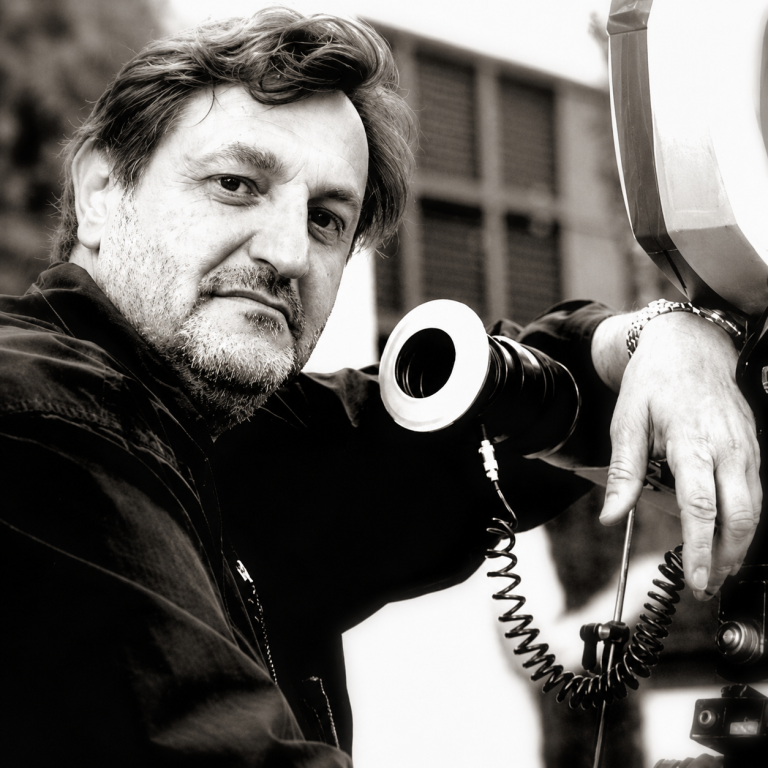
Henryk Cymerman, MFA
Cinematographer. His credits include Star Trek: First Contact.

Alison Marek, MFA
Award-winning writer and director. MFA, New York University.
Frequently asked questions
Can you really learn filmmaking online?
What is the residential, and is it compulsory?
What equipment do I need, and what does it cost?
You supply your own production equipment. The program catalog puts the required equipment at approximately $800, separate from tuition. Check the current catalog before you enroll, since specifications change.
Do I need a showreel or portfolio to apply?
No. Neither program requires a showreel, portfolio or work samples, and there is no entrance examination. The MFA asks for official undergraduate transcripts showing a GPA of at least 3.0, a resume, and a 300–400 word statement explaining why you have chosen the program and how it supports your career goals. Applicants whose first language is not English also provide evidence of proficiency.
Will I make my own film?
In the MFA, yes. The program ends in a two-term thesis project in which you develop, write, direct and cut a film of your own. The Bachelor of Arts is coursework-based across four areas of competence rather than built around a single capstone film.
What is the difference between the MFA and the BA?
How much credit can I transfer in?
How long does each program take?
The MFA takes about three years, with a maximum of four years from matriculation. The bachelor’s completion program takes about two years, or under one with the full transfer credit, and allows up to five years from matriculation.
Are the film programs accredited?
What does it cost, and is financial aid available?
Tuition is charged course by course rather than as a single fee, so the cost is spread across your studies, and current figures for each program are published in its catalog. Anaheim University does not participate in federal or state financial aid programs, so US federal loans and grants are not available — worth establishing before you apply.
Can I study while working full time?
Yes. Both programs are built for people in work: courses run in nine-week blocks with one live class each week, and a new term starts every ten weeks.
Can I study if English is not my first language?
Yes. Both programs ask for evidence of English proficiency — the MFA accepts TOEFL 530 paper-based or 71 internet-based, IELTS 6.5, or TOEIC 800; the bachelor’s asks for TOEFL 61 internet-based, IELTS 6.0 or TOEIC 625. Each catalog lists what it accepts.
Can I enroll from any US state?
Not currently. Anaheim University does not accept students residing in a number of US states and territories, and the list is published on each program’s entrance requirements page. Check it before you apply, or call Student Services on 714-772-3330 to confirm your state. Students outside the United States are unaffected.
When can I start?
A new term begins every ten weeks, so there are several entry points across the year rather than a single annual intake.
Explore Other Subjects
Explore six subject areas and discover the schools and institutes that offer programs in each field.
Talk to a Film & Entertainment Advisor
Not sure which creative program is right for you? Speak with an advisor to compare undergraduate and graduate study options in Film & Entertainment and find the path that best matches your experience, creative interests, and academic goals.
