
Curriculum
June 6, 2023 2026-09-23 20:43Curriculum
BA in Creative Communications Curriculum
The Bachelor of Arts in Creative Communications Completion Program in Film & Entertainment is a 60-unit completion program: students transfer in up to 90 of the 120 units required for the degree and complete the remaining units at Anaheim University. The 60 units are made up of 20 courses, each carrying three units and running nine weeks, with students taking two courses at a time.
The coursework is organized into four Areas of Competence — History & Theory, Pre-Production & Development, Production A to Z, and What’s New — developed around the Carrie Hamilton Entertainment Institute’s pillars of creativity, connection, compassion, communication and contribution. Students who transfer the full 90 units may complete the BA in less than one year.
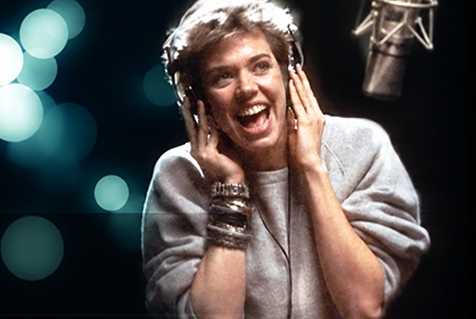
The BA in Creative Communications is offered through the Anaheim University Carrie Hamilton Entertainment Institute.
Each course is nine weeks long and carries three units; students take two courses at a time. The 60 units above are completed at Anaheim University; students transfer the remaining 60 units (30 of which must be general-education courses) to reach the 120 units required for the BA degree. Students maintain a 2.0 grade point average to graduate, and the maximum time allotted to complete the program is four years.
Areas of Competence
Twenty courses across four Areas of Competence, each carrying three units. Open any course to read its full description.
History & Theory
Students examine the unique formal properties, history and influences of particular media.
This introductory course introduces some of the major theories used to understand film as a social, cultural, and artistic form. Topics considered include feminism, genre, the auteur, spectatorship, cultural studies, and transnational cinema.
This course introduces a story development system that provides a precise map of an entire plot, enhancing and moving beyond the traditional “three-act” technique.
Students study the history of film and television as a cultural phenomenon from a decades approach, exploring the cultural, social and aesthetic evolution of both, national versus international trends, the influence of politics and network structures, and questions of on-screen representation, race and gender.
This course deepens students’ understanding of genre in three ways: its industrial function as a marketing category; as a system of narrative and audiovisual codes; and as an implied contract of expectation between filmmakers and audience to deliver a certain emotional experience.
Pre-Production & Development
Students delve into the collaborative and creative processes of new projects while navigating the professional and ethical responsibilities they entail.
A fundamental understanding of the importance of diversity of representation in film and other media. Through readings and screenings, students explore how on-screen images dialogue with larger issues of social equity and justice — gender, ability, class, sexual orientation, race and ethnicity — and develop a broad historical understanding of representations of identity.
In this project-based introductory course, students gain a comprehensive understanding of the effective screenwriting process, including outlining, writing a first draft, and the process of effective revision.
Storyboards are “visual scripts” that help visualize scenes, flag production problems, estimate costs and save shooting time. Using supplied scripts, audio tracks and templates, students learn camera storytelling and create thumbnail, rough and full-color presentation storyboards, combining each with a soundtrack to produce an animatic.
In this project-based introductory course, students practice effective communication of their creative ideas. Topics include the ‘art of pitching’ and the design of an effective creative-project business plan, supplemented by expert industry professionals.
Production A to Z
Students explore how to effectively communicate ideas and emotions through the lens of professional practice.
An introduction to Disney’s 12 Basic Principles of Animation through a simple 2D, paper-and-pencil approach, with emphasis on performance character animation (acting). Through lecture and lab, students create several 2D projects covering key pose animation, squash and stretch, anticipation, staging, arcs and lines of action.
A fundamental understanding of the digital filmmaking process from pre-production through production to post-production and delivery. Through lectures, screenings and hands-on learning, students learn screenwriting, casting, working with actors, camera techniques, directing, editing and finishing, taking a film project from inception to completion.
An introduction to the basic concepts of video editing: getting the right footage on set, organizing footage, communicating with the director or editor, creating rough cuts, and making final editing decisions based on the goals for the film. The basics of sound editing are also discussed, and students edit their own and others’ footage.
An intensive, foundational overview of directing a film or media project from concept to a unified, compelling vision. Through lectures, screenings and practical exercises, students develop an understanding of the director’s key responsibilities — working with actors, effective script analysis and visual design — and develop an original or adapted scene.
A more in-depth overview of advanced filmmaking focused on the principles and techniques of digital cinematography. Through screenings, readings and practical exercises, students learn cinematic lighting, composition, camera and lens functions and movement, and apply the skills to light and compose an original scene.
Through lectures, screenings, readings, discussions and hands-on learning, students learn the fundamentals of documentary production and then research, develop, produce, shoot, edit and deliver a short documentary project by the end of the class.
A foundational understanding of how music can be used to tell stories and impact emotions. Through lectures, examples drawn from a range of creative work, and hands-on applied activities, students learn the structures of creating and using musical accompaniment in film and other creative works.
What’s New
Students examine emerging industry trends and the practical means for cultivating a sustainable, adaptive professional career.
An introductory survey of new directions and emerging trends in entertainment and storytelling. In addition to augmented reality, virtual reality, transmedia storytelling and the building of storyworlds, students are guided through the design of a simple, fully functional prototype interactive game. (No previous experience or programming required.)
In an increasingly interconnected global marketplace, understanding the transnational nature of the construction and reception of film and media is essential. Through surveying a selection of transnational media, this introductory course provides frameworks for thinking about the transnational nature of film, media and culture.
Entertainment is big business and multifaceted — from film production and television programming to videogames, web design, music producing, franchising and packaging. This course provides a macro and micro view of the industry, from the global to the local, so students understand its interconnectedness and possibilities.
An introductory survey of new directions and emerging trends in digital marketing, with a focus on entertainment and storytelling and its impact on the entertainment business. Students develop skills to understand digital marketing, develop meaningful content, conduct analytics to evaluate campaigns, and make the most of organic and paid tactics to reach a target audience.
A comprehensive understanding of how to use developments in web technology to create videos for online distribution. Through lectures, screenings, assigned readings and practical work, students learn web video production techniques, aesthetics, editing for the web, compression and technical considerations for uploading, and social media and online marketing, applied to their own online video projects.
Program Requirements
Key requirements students complete as they progress through the program and to graduation.
The BA requires 120 semester units, including a minimum of 30 completed at Anaheim University. Up to 90 units may be transferred in: the first 60 (30 of them general-education courses) are required for entry, and up to 30 more must align with BA in Creative Communications courses.
Students must maintain a 2.0 grade point average (GPA) in order to graduate. Any student whose GPA falls below 2.0 is placed on Academic Probation and given two terms to bring it back to a 2.0 level. A grade lower than 70% on any course means the course must be repeated.
The maximum time allotted for completion of the BA program is four years. Students who transfer the full 90 units may complete the degree in less than one year. Students who need additional time must receive permission from the Program Director.
