
Master of Entrepreneurship
June 6, 2023 2026-10-05 5:59Master of Entrepreneurship
Master of Entrepreneurship
Turn your business ideas into successful ventures. Designed for aspiring and practicing entrepreneurs with a bachelor’s degree, this online master’s, taught by Akio Morita School of Business faculty led by Dean Dr. Robert Robertson, builds the innovative thinking and business skills to launch and manage ventures of your own.

Online
No residency required
18 months
While working full-time
36 credits
12 courses incl. capstone
Every 6 weeks
New courses start
DEAC
Accredited
Why Choose the Master of Entrepreneurship
Four reasons entrepreneurs choose Anaheim University to build their ventures.
Founded by Entrepreneurship Scholars
The program was founded by Dr. JoAnn Carland and Dr. Jim Carland, who earned their Ph.D.s at the University of Georgia.
Plan Your Own Venture
Finish with a business plan for a company you are considering launching.
Live Online Seminars
Two 90-minute live webcam seminars in every six-week course, at the end of weeks 2 and 5, plus a daily discussion forum.
Apply It Tomorrow
What you learn today can be used in your entrepreneurial venture tomorrow.
Program Learning Outcomes
What you will be able to do by the time you complete the program.
Spot Opportunities
- Identify opportunities in untapped and underserved markets
- Find new opportunities by applying existing technologies to new fields and markets
Create Opportunities
- Invent and develop entirely new ideas, products and services
- Create new industries, infrastructures and ways of doing business
Entrepreneurial Will
- Build the self-confidence to create and grow ventures through mastery of entrepreneurial skills
Business Planning
- Develop a business plan
- Evaluate whether a business is viable and analyze market conditions
How You'll Learn
Each six-week course combines two live webcam seminars, a daily discussion forum, written and group assignments and a team project.
Your Path to the Master's
Twelve courses that end with a business plan for your own start-up.
01
STEP 1
Core Courses
Core courses in business administration that build your foundation.
02
STEP 2
Entrepreneurship Courses
Courses in entrepreneurial forecasting, planning, innovation and strategy.
03
STEP 3
Capstone
Develop a business plan for a company you are considering launching as a start-up.
Career Paths
Launch your own venture or drive innovation inside an organization.
FOUNDERS
Start Your Own Business
Launch and manage a venture of your own.
- Start-up founder
- Small business owner
- Franchise owner
CORPORATE INNOVATION
Innovate Inside Organizations
Lead new products and ventures within established companies.
- Innovation manager
- New product development manager
- Business development manager
ADVISING
Guide Other Entrepreneurs
Help founders plan, fund and grow their ventures.
- Small business consultant
- Start-up mentor
- Business plan advisor
SOCIAL VENTURES
Build for Impact
Use entrepreneurial skills to create social value.
- Social enterprise founder
- Nonprofit program director
- Community enterprise lead
Meet Our Faculty
Learn from experienced academics and professionals who bring subject expertise, research, and real-world perspective into the classroom.
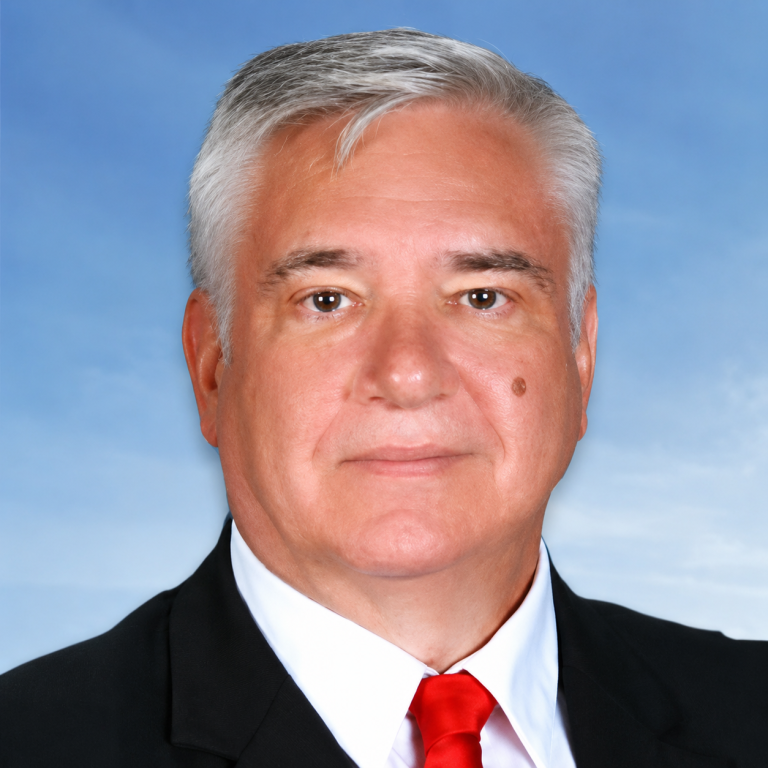
Robert Robertson, Ph.D.
Dean of the Akio Morita School of Business. Ph.D. in Management and Organization, Stirling University. A Fulbright Specialist who has lectured across Asia, Europe and Latin America.

Carlos Aquino, Ph.D.
Ph.D. in Sciences and Technology, University of São Paulo. Author of How to Learn: Andragogy and Learning Skills, with 25 years leading business schools in the U.S. and Brazil.

Vince Carter, Ph.D.
Ph.D. in Marketing, George Washington University; MBA, Columbia. Editorial board, Marketing Management Journal.

Barbara Son, Ph.D.
Ph.D. in Urban Business Economics, Portland State University, with a master’s concentration in technology, business and economics.
Ready to Start Your Master of Entrepreneurship?
Speak with an advisor about your venture and goals, or start your application today.
Master of Entrepreneurship Curriculum
In the Anaheim University Carland Entrepreneurship Institute online Master of Entrepreneurship, students take twelve courses: six core courses, four specialized entrepreneurship courses (including the required Entrepreneurship Capstone at the end of the program), and two elective courses. The program totals 36 units, with each course carrying three units.
Courses are taught in an accelerated format — each term is six weeks long, and students may enroll in new courses every six weeks, completing the degree in approximately 18 months. The program moves from the core disciplines of international business into a specialization in entrepreneurship, and concludes with a capstone business plan for a venture the student is considering launching.
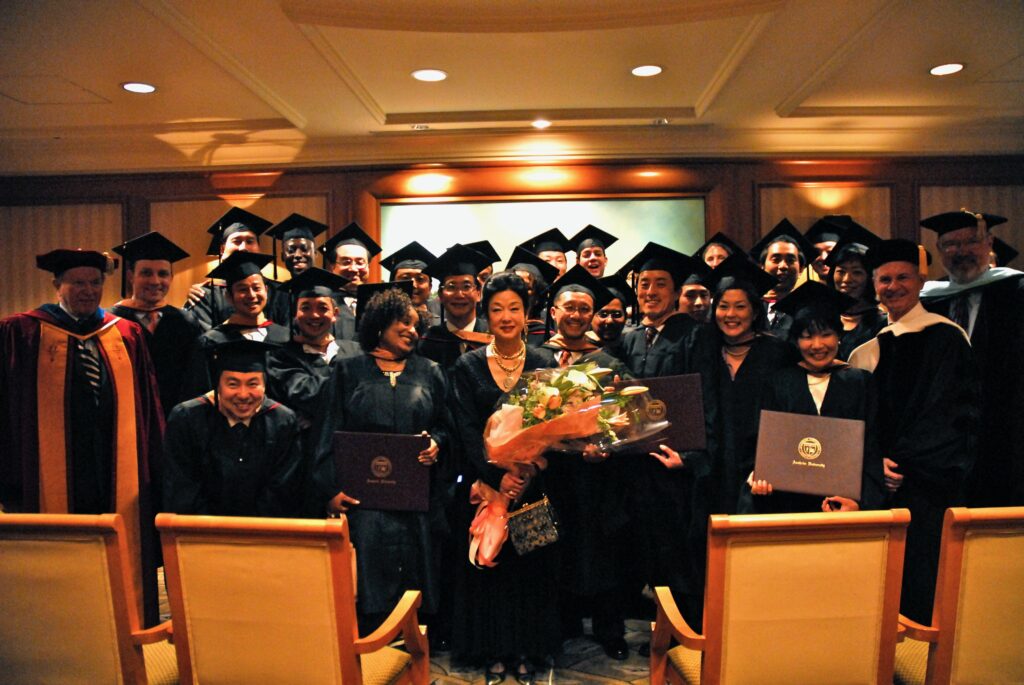
Anaheim University business students study fully online through the Akio Morita School of Business and Carland Entrepreneurship Institute.
Each course is six weeks long and carries three units, and a new term begins every six weeks. Students may enroll in a single course, several courses, or the entire degree. The 36 units above are the six core courses, four specialized courses (three chosen plus the required Entrepreneurship Capstone) and two electives. Students must pass the capstone with a grade of 80% or higher in order to graduate.
Coursework and Capstone
Six core courses, a specialization in entrepreneurship ending with the required capstone, and two electives drawn from international business and sustainable management. Open any course to read its full description.
Core Courses
The six core courses covering the foundations of international business — economics, human resources, accounting, marketing, management and finance.
Economics affects the way we live, both in the United States and internationally, for countries who use the market system to allocate resources. This course helps students understand the operation of a market system in an international setting, explore the organization of various societies and the great global public issues of the day, and understand the behavior of international business firms through the principles of international economics.
Human beings are the most crucial component of any organization. This course studies human management principles from the international perspective, treating employees as investments that benefit a company in the long run. It surveys the traditional functions of international human resource (IHRM) management — compensation, staffing, training, labor relations and performance evaluation — and the mechanisms that contribute to an organization’s success.
In a globalized world, students need to understand how financial reporting practices differ across countries and the ongoing efforts to harmonize standards using International Financial Reporting Standards (IFRS). The course grounds participants in the key principles of accounting and the major features of IFRS, the links between accounting statements, valuation methods and investment analysis, and technical areas such as inventory valuation, reserves, consolidations and taxation of income.
International Marketing frequently requires major changes in how organizations conduct business in a global marketplace. Today’s business leader must be aware of the implications of marketing strategies and how they are employed in different countries with different cultures. This course focuses on identifying and meeting the needs of specific international target markets through close interaction with managers from promotion, finance, accounting and human resources.
We are observing a fundamental shift in the nature of geopolitics. This course develops a deeper understanding of how and why management practices and processes differ around the world, and the skills necessary to function successfully in the international business environment, as future endeavors are increasingly characterized by a search for common ground, productive partnerships, and mutual benefit.
This course covers material essential to a comprehensive understanding of international financial management. Topics include, but are not limited to, foreign exchange markets, the global cost of capital, corporate strategy and foreign investment, and multinational capital budgeting.
Specialized Courses
Four specialized courses from the Carland Entrepreneurship Institute. Students choose three of the first four courses and complete the required Entrepreneurship Capstone at the end of the program.
This course is imperative to successful entrepreneurial ventures, where the ability to differentiate oneself from the competition is paramount. It helps students understand the personality of entrepreneurs and their relationship with risk, practice creative exercises that open the mind to new possibilities, understand why some companies are more innovative than others, and consider what can be accomplished in a creative environment.
The objective of this course is to inculcate an understanding of the forecasting and budgeting process: preparing sales forecasts for new and existing ventures, building variable and fixed cost budgets to support the forecast, documenting and supporting the resulting forecasts, and preparing cash flow forecasts and start-up costs for a new venture.
The objective of this course is to inculcate an understanding of the value of intellectual property to an entrepreneurial venture, and to teach students how to create, protect, and preserve intellectual capital. Students develop higher-level critical thinking skills, evidenced by analysis, evaluation, and synthesis.
The objective of this course is to inculcate the strategic skills required to support the ongoing development of strategy and distinctive competencies, the vision to support effective environmental scanning, and the knowledge to plan for harvesting/succession and to design innovative and effective entrepreneurial compensation plans.
This final, summative experience is the culmination of the Master of Entrepreneurship. Each student develops a business plan for a company they are considering launching as a start-up — a comprehensive analysis of whether the idea is feasible, including an executive summary, business description and structure, market research and strategy, management and personnel, and financials. Students must earn a final grade of 80% or higher in this course in order to graduate.
Elective Courses
Students choose two electives — one international business course from the Akio Morita School of Business and one sustainable management course from the Kisho Kurokawa Green Institute. Elective offerings are subject to faculty availability and may vary by term.
This course provides a comprehensive coverage of the legal, cultural, political, economic and ethical issues faced by global business managers. An understanding of these issues is enhanced through the use of real-world examples, cutting-edge cases, managerial problems, and ethical issues.
Intercultural communication is international communication across national boundaries involving many different cultures. This course helps students understand how people from different countries and cultures behave, communicate and perceive the world quite differently, and studies situations where people from different cultures interact in a business environment, building an understanding of variations in language, customs, social attributes and thought patterns essential to the conduct of international business.
Successful managers in a world of global competition must have an array of skills, talents and abilities at their disposal. This course uses extensive examples to illustrate the vibrancy and challenge of international business, including the degree of geographical literacy necessary to succeed in international markets.
Supply Chain Management involves the flows of materials and information among all of the firms that contribute value to a product, from the source of raw materials to the end customer. The course helps students understand the strategic importance of good supply chain design, planning and operations, the key drivers that improve supply chain performance, and the analytic methodologies for supply chain analysis.
The Triple Bottom Line Accounting and Management course is an expanded version of accounting for corporate activity, adding social and environmental impact to the equation so the report of corporate activity reflects a true bottom line: economic prosperity, environmental quality and social justice. It provides the basis for students to determine the true social effects of the businesses they work for and to manage for the future.
Green Marketing & Environmental Product Design/Recycling is structured around the traditional “4Ps” of marketing and explains how marketing-mix decisions influence environmental outcomes. The emphasis is on converting consumption systems to a sustainable, circular use of resources, and on crafting “win-win-win” solutions where customers, organizations and ecosystems all benefit.
Corporate Social Responsibility and Ethics is a comprehensive study of the core issues for business in sustainability, social responsibility and ethics. The course introduces relevant issues and the views of corporate stakeholders, approaches for presenting and carrying out a program of sustainability, and the ethics of business and issues of transparency, showing that community engagement and the maximization of shareholder value can be mutually reinforcing.
Sustainable Enterprise Development and Leadership provides a comprehensive and practical analysis of what sustainable business development is and how companies can use it to make a significant difference. It is a holistic management approach covering the entire value-added system, and it argues that achieving sustainable outcomes requires a profound change in strategic thinking, leadership and the management of businesses.
Graduation Requirements
Key requirements students complete as they progress through the degree and to graduation.
The program culminates in the Entrepreneurship Capstone (ENT 612), in which each student develops a full business plan for a company they are considering launching as a start-up. Students must earn a final grade of 80% or higher in the capstone course in order to graduate.
Students must maintain a 3.0 grade point average (GPA) in order to graduate. Any student whose GPA falls below 3.0 is placed on Academic Probation and given two terms to bring it back to a 3.0 level. A grade lower than 80% on any course means the course must be repeated.
The maximum time allotted for completion of the Master of Entrepreneurship program is three years. Extensions require written approval from the Program Director, the Office of the Registrar, and the Office of Financial Affairs.
2026 Term Calendar
Each course runs six weeks, with two 90-minute live online seminars at the end of weeks one and five. Courses and seminar dates for each term are announced ahead of time. Enroll every time a course you need is offered.
| Term | Dates | Courses offered |
|---|---|---|
| Term 1 | January – February 2026 | TBDCourses to be announced BUS 615Capstone |
| Term 2 | February – March 2026 | TBDCourses to be announced BUS 615Capstone |
| Term 3 | March – May 2026 | TBDCourses to be announced BUS 615Capstone |
| Term 4 | May – June 2026 | TBDCourses to be announced BUS 615Capstone |
| Term 5 | June – July 2026 | TBDCourses to be announced BUS 615Capstone |
| Term 6 | August – September 2026 | TBDCourses to be announced BUS 615Capstone |
| Term 7 | September – October 2026 | TBDCourses to be announced BUS 615Capstone |
| Term 8NEXT | October – December 2026 | TBDCourses to be announced BUS 615Capstone |
Plan Your Studies
A few rules that help you finish on time.
COURSE ORDER
Take Courses When Offered
Enroll each time a course you need is offered, so you can finish on schedule.
CAPSTONE
Business Plan at 80%
You need at least 80% in ENT 612, your business plan capstone, to graduate.
GRADES
Keep a 3.0 GPA
Below 3.0, you have two terms on academic probation to bring it back up. Any course below 80% must be repeated.
TIME LIMIT
18 Months to Three Years
Finish in as little as 18 months. Studying beyond three years needs approval.
Ready to Start Your Master of Entrepreneurship?
Speak with an advisor or start your application today.
SAVE $6,750
ON MASTER OF ENTREPRENEURSHIP TUITION
Program Cost Summary
| Master of EntrePrenuership Program | Standard | With 50% Tuition Relief |
|---|---|---|
| Tuition | $13,500 ($1,125 × 12 courses) |
$6,750 ($562.50 × 12 courses) |
| Application Fee | $75 | $75 |
| Registration Fee | $100 | $100 |
| Records Fee | $2,400 ($200 per term × 12 terms) |
$2,400 ($200 per term × 12 terms) |
| Total Tuition & Required Fees | $16,075 | $9,325 |
| Estimated Textbooks | $860 | $860 |
| Estimated amount paid if no Research Reserve funds are used | $16,935 | $10,185 |
| Estimated Total Program Cost if $1,500 Research Reserve fund is used | $18,435 | $11,685* |
*See the Research Reserve Fund note and Important Cost Information below.
AFFORDABLE. FLEXIBLE. PAY AS YOU LEARN.
Students pay for one course at a time as they progress through the program.
/ 6-week term
Tuition Relief Rate
Master of Entrepreneurship Detailed Tuition & Fee Schedule
Full itemized fees for the program are listed below.
| Fee | Amount |
|---|---|
| Application fee non-refundable | $75 |
| Registration fee non-refundable | $100 |
| STRF fee (California residents only) non-refundable | $0 |
| Course fees | |
| Tuition — $375 per credit × 3 credits | $1,125 / course |
| Tuition — 12 courses | $13,500 |
| Records fee | $200 / term |
| Estimated textbook fees | $860 |
| Other fees | |
| Research reserve fund | $1,500 |
| Transfer credit fee optional | $75 / course |
| Original transcript | No cost |
| Each additional transcript copy optional | $25 |
| End-of-program fees | |
| Diploma | No cost |
| Replacement diploma optional | $200 |
| Replacement cover optional | $100 |
| Course completion letter optional | $35 |
| Total cost of program | $18,435 |
Research Reserve Fund
ABOUT THE $1,500 RESEARCH RESERVE FUND
The estimated total program cost includes a $1,500 research reserve fund available for approved journals, research materials, software, and other resources that may support the student’s doctoral research. Students are not required to spend the entire $1,500 and are responsible only for research expenses actually incurred.
With 50% Tuition Relief: estimated total program cost, including the full research reserve and textbooks = $11,685. The estimated amount paid, not including textbooks and if no Research Reserve funds are used = $9,325.
Important Cost Information
- Cost assumes completion within the standard program schedule, assuming completion in 20 terms on the first attempt.
Program Cost and Additional Enrollment: The estimated total program cost shown above assumes successful completion of all required courses on the first attempt and completion of all program requirements within the standard program schedule. Students who repeat a credit-bearing course will be required to pay additional tuition. Students who require enrollment beyond the standard program schedule to complete a thesis, dissertation, or other final academic requirement will be required to pay an Extension Fee and records fee for each additional term of enrollment. The Extension Fee applies when the student must remain enrolled to continue work toward completion but does not earn additional academic credits during the additional term. The Extension Fee is separate from tuition and is charged for the additional period of enrollment and continued academic supervision, advising, administrative support, and access to University resources necessary to complete the program. The Extension Fee for each additional term is equal to the amount of tuition that would otherwise have been charged for a standard term under the tuition rate in effect when the student originally entered the program, before application of any Tuition Relief, scholarship, or other discount, unless the University expressly approves a reduced Extension Fee in writing. Any Tuition Relief, scholarship, or other discount reflected in the estimated program cost applies only to the terms included in the standard program schedule and does not apply to repeated courses or additional thesis or dissertation terms. Accordingly, the estimated total program cost may increase if a student repeats a course or requires one or more additional terms beyond the standard program schedule to complete the program.
- Anaheim University makes certain provisions in order to provide access to library resources and library services for all students enrolled directly through Anaheim University. However, students enrolled in Anaheim University’s online graduate degree programs are required to have an additional reserve fund to be used for the purchase of journals and research – materials that will aid them in their studies by providing information specific to their unique areas of interest and research – and to provide access to software and other resources that may help them in the completion of their studies. The research reserve fund is $2,000 for doctoral students to be used over the duration of their program. Students are not required to spend the entire research fund – only that amount necessary in order to carry out their research.
- *Student Tuition Recovery Fund (STRF): The Student Tuition Recovery Fund (STRF) is administered by the California BPPE and applies only to California residents. The STRF fee is currently zero ($0) per one thousand dollars ($1,000) of institutional charges. The State of California established the Student Tuition Recovery Fund (STRF) to relieve or mitigate economic loss suffered by a student in an educational program at a qualifying institution, who is or was a California resident while enrolled or was enrolled in a residency program, if the student enrolled in the institution, prepaid tuition, and suffered an economic loss. Unless relieved of the obligation to do so, you must pay the state-imposed assessment for the STRF, or it must be paid on your behalf, if you are a student in an educational program, who is a California resident, or are enrolled in a residency program, and prepay all or part of your tuition. You are not eligible for protection from the STRF and you are not required to pay the STRF assessment, if you are not a California resident, or are not enrolled in a residency program.
- The above itemizes all of the fees and charges for which the student is responsible. The refund policy may be found in the Policies & Procedures section.
- Tuition may be paid on a course-by-course basis. Students must pay the required tuition fee prior to commencing their next course. The student is not required to pay this tuition fee until the student wishes to register for his or her next course.
- Students interested in inquiring about non-interest-bearing monthly payment plan options should e-mail [email protected]
- Students may make payment by check, credit card (Visa, MasterCard, American Express, or Discover), money order, or bank transfer (the student is responsible for any transaction fees imposed by the institution).
- Please e-mail [email protected] for information on how to make payments.
READY TO EARN YOUR MASTER OF ENTREPRENEURSHIP?
Master of Entrepreneurship Admission Requirements
Admission to the Master of Entrepreneurship is open to applicants ready for graduate study in business. Applicants must hold a bachelor’s degree from an accredited institution, meet the minimum 3.0 GPA requirement, and provide the required academic and application materials. No entrance examination is required.
Review the admission requirements, application materials, English proficiency standards, transfer credit policy, and enrollment restrictions below. When you’re ready to apply, you can complete Anaheim University’s online application and submit the required supporting documents.

| Requirement | Detail |
|---|---|
| Application materials | |
| Application form | Required |
| Application fee non-refundable | $75 |
| One recent color photograph | Digital is okay |
| Government-issued photo ID | Scanned copy required |
| Current résumé | Required |
| Academic requirements | |
| Earned bachelor’s degree | From an accredited institution recognized by the US Dept. of Education / CHEA, or the government of the awarding country |
| Minimum grade point average | 3.0 on a 4.0 scale (or equivalent) |
| Official transcripts | Undergraduate, sealed, sent from the awarding institution |
| English proficiency — non-native English speakers (one of) | |
| TOEFL | 530 PBT / 197 CBT / 71 iBT |
| IELTS | 6.5 |
| TOEIC | 800 |
| PTE Academic | 50 |
| Other qualifying options | See the full list below |
| Other | |
| Entrance examination | None required |
| Transfer credit optional | Up to 6 units (2 graduate classes); $75 per course reviewed |
| Prior experiential credit | Not accepted |
English Proficiency Requirements
The language of instruction at Anaheim University is exclusively English, and English language services are not provided. Non-native English speakers must provide original documentation of college-level proficiency by meeting one of the following minimum scores:
Proficiency may also be shown by a degree from an institution where English is the primary language of instruction; a transcript showing 30 semester hours taught in English with a “B” average, or a “B” or higher in an English composition class. Other accepted qualifications include BULATS Level 3 (60, accepted only for Cultura Inglesa in Brazil); ACT COMPASS ESL Placement Level 3; Eiken Pre-1; a CEFR B2 level assessed through recognized ESOL examinations, including the University of Cambridge; Duolingo English Test 100; Michigan MET 55, ECCE 650/LP, or ECPE 650/LP; or the College Board Accuplacer ESL series.
Transcripts not in English: if your institution does not routinely issue transcripts in English, original-language records must be submitted with official English translations issued by the university or a professional translation service (Accredited Language Services, Berlitz, Liaison Linguistics, Josef Silny & Associates, American Evaluation & Translation Services, or Education Evaluators International). Translations must be exact and complete versions of the original records.
Transfer Credit
Anaheim University will accept up to two graduate semester classes (8 units) awarded by another institution toward the Graduate Diploma in TESOL or the TESOL Graduate Diploma. You must clearly demonstrate the equivalency of each transfer course through relevant documents (syllabus, catalog, course outline) and justify its acceptance through a petition directed to the Dean; no course with a grade lower than “B” will be considered. There is a fee of $75 per course of credit transferred, and the overall program cost is adjusted for approved credit. All petitions must be submitted as part of your initial application. Credits awarded as part of another completed degree will not be accepted, and Anaheim University does not extend experiential credit to any student.
Enrollment Restrictions by State
Anaheim University currently does not accept students who reside in the following U.S. states and territories. If you reside in one of these locations, please contact Student Services at 714-772-3330 before applying.
How to Apply
- 1Submit your applicationComplete the Anaheim University admissions application. You may apply online or download the PDF application and submit it by email.
- 2Submit your supporting documentsProvide a recent passport-size color photograph, government-issued photo ID, a current résumé, official undergraduate transcripts, and English-proficiency documentation if required. Documents may be uploaded with the online application or emailed to [email protected]. Scanned copies may be accepted to expedite processing while required originals are being sent.
- 3Pay the application feePay the $75 non-refundable application fee. Payment may be made by credit card, check or money order, or bank wire transfer. For payment instructions or assistance, contact [email protected].
- 4Send required original documentsAny required original application documents that are not submitted online should be sent by registered mail to:
Anaheim University
Office of Admissions, Room 110
1240 S. State College Blvd.
Anaheim, CA 92806-5150
USA - 5Application reviewOnce your application materials are received, Anaheim University will review your application. A receipt for the application fee will be provided, and if your application is incomplete, the University will contact you with instructions regarding any outstanding materials.
- 6Complete your enrollmentIf your application is approved, you will receive an acceptance notification and Enrollment Agreement. Complete and return the required enrollment documentation and follow the University’s instructions for payment, registration, and beginning your program.

Robert Robertson, Ph.D.
Dean, Akio Morita School of Business Dr. Robert Robertson holds a Ph.D. in Management and Organization (Stirling University, Scotland); Massachusetts Institute of Technology (MIT) Sloan…

Andrew E. Honeycutt, DBA
President, Anaheim University Professor Dr. Andrew E. Honeycutt, President of Anaheim University, is the recipient of a Harvard University Doctor of Business Administration (DBA) degree…

Carlos Aquino, Ph.D.
Professor Holding a George Washington University MS in Structural Engineering and a University of Sao Paolo Ph.D. in Sciences and Technology, Dr. Carlos Tasso Eira…

Vince Carter, Ph.D.
Professor Dr. E. Vince Carter is a Professor at the Anaheim University Akio Morita School of Business and Kisho Kurokawa Green Institute. Vince’s teaching approach…

Mariah Jeffery, Ph.D., CSCP
Professor Dr. Mariah Jeffery holds a Ph.D. in Operations Research and a Master of Science in Industrial Engineering from the University of Central Florida, and…

Tamara Myatt, Ph.D.
Professor Holding a Ph.D. and Masters in Human and Organizational Systems from Fielding Graduate University, Tamara Myatt has spent more than a decade transforming the…

Chris Raymond, Ph.D.
Professor Dr. Christopher Raymond earned a Ph.D. in economics from the University of California, Santa Barbara, and later completed an international MBA from École National…
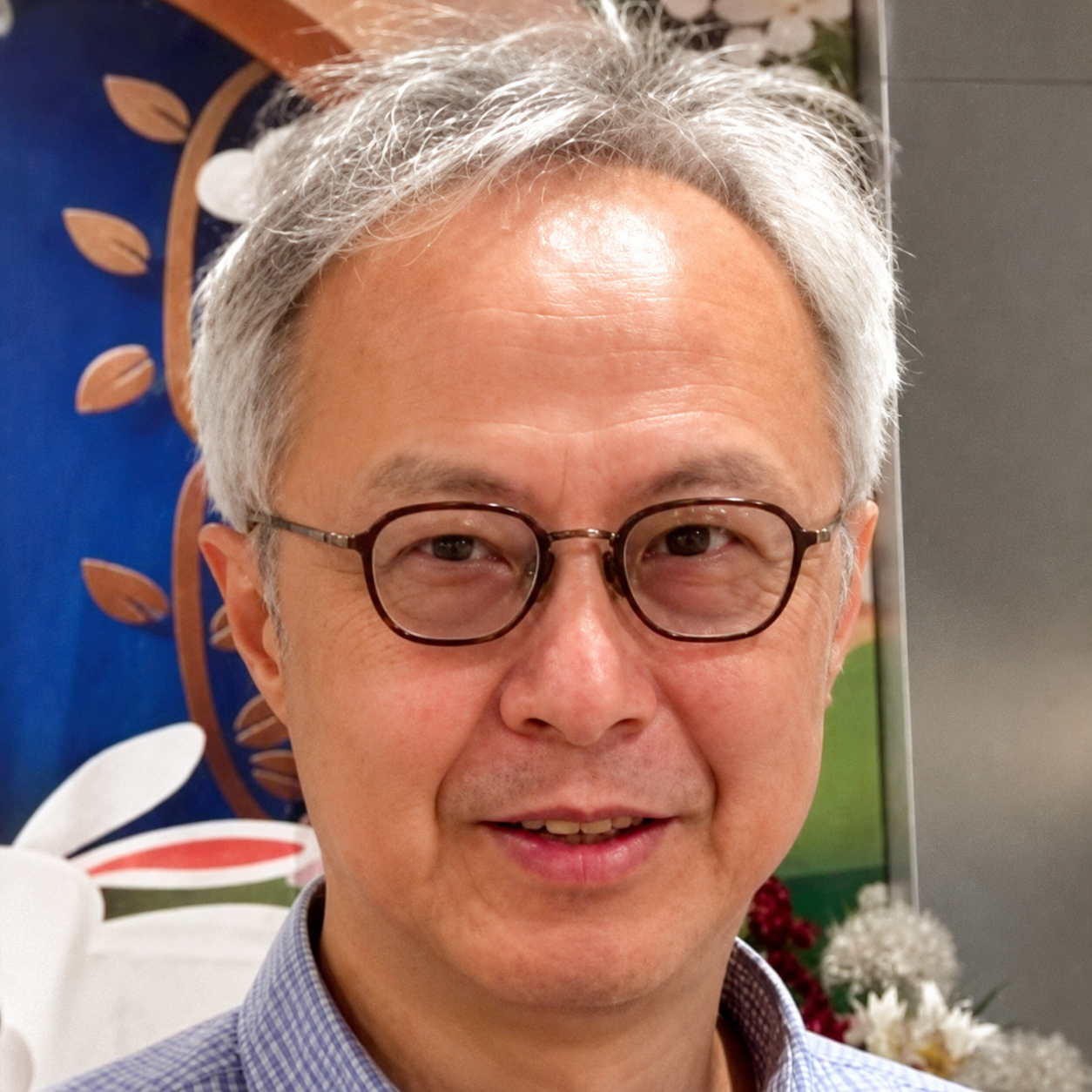
Kwok Shum, Ph.D.
Director, Kisho Kurokawa Green Institute Professor After earning a Stanford University Master of Science in Engineering degree, Dr. Kwok Shum received his Ph.D. in Management…

Stavros Sindakis, Ph.D.
Professor With both a Ph.D. and MBA in Strategy, Enterprise & Innovation from the University of Portsmouth, Dr. Stavros Sindakis has made significant contributions to…

Barbara Son, Ph.D.
Professor Holding a Ph.D. in Urban Business Economics from Portland State University, and a Masters in Urban Affairs with a concentration in Technology, Business, Economics…

John Wang, Ph.D.
Professor Dr. John Wang received a scholarship award to complete his Ph.D. in Business Administration at Temple University in 1990, after earning his M.S. in…

William Hartley Ph.D.
President Emeritus Professor Dr. Hartley’s background is a combination of education, private sector work, teaching and consulting. Holding a bachelor’s degree, three master’s degrees, and…

Caryn Callahan, Ph.D.
Senior Professor Emeritus Holding a Harvard University Ph.D. in East Asian Languages in Civilizations with a specialization in Japan and an MBA specializing in Finance-Accounting…
