
Bachelor of Arts in Creative Communications, Film and Entertainment
June 6, 2023 2026-10-05 6:01Bachelor of Arts in Creative Communications, Film and Entertainment
BA in Creative Communications (Degree Completion)
Finish your bachelor’s degree with a concentration in film and entertainment. Designed for students around the world who have already earned college credit, this online completion program from the Akira Kurosawa School of Film, taught by faculty including Dr. David Desser, builds your skills in media and creative communications.
Online
Two 9-week courses at a time
Up to 90
Transfer credits accepted
About 2 years
Under 1 with full transfer credit
Every 10 weeks
New terms start
DEAC
Accredited
Why Choose the BA in Creative Communications
Four reasons students finish their degree with the Akira Kurosawa School of Film.
Continue Where You Left Off
Transfer up to 90 units from another institution toward your BA.
Learn From Hollywood-Based Professors
Study with professors based in Hollywood and other leading entertainment markets without relocating.
Meet Industry Professionals
Connect with entertainment industry professionals online during your studies.
Study Online, Anywhere
Readings, film analysis, written and video assignments, and discussion forums, all online.
Program Learning Outcomes
What you will be able to do by the time you complete the program.
Creative Expression
- Show proficiency in creative expression across a variety of media
- Understand and articulate the formal properties, history and influences of particular media
Collaboration & Ethics
- Understand the role of diversity and collaboration in creative enterprise
- Recognize the professional and ethical responsibilities that come with creative work
Professional Communication
- Communicate your practice through pitches, treatments and scripts
- Present your professional identity and body of work across digital platforms and social media
Industry Awareness
- Understand the economic and technological trends shaping film and entertainment
- Apply them to storytelling and to building a sustainable professional practice
How You'll Learn
Each nine-week course combines weekly readings and film analysis, written and video assignments, and an online discussion forum. You take two courses at a time.
Your Path to the BA
Bring your earlier credits and finish your degree online.
01
STEP 1
Transfer Your Credits
Transfer 60 to 90 credits from another institution toward the 120 needed for the BA.
02
STEP 2
Complete Your Courses
Complete at least 30 credits at Anaheim University, taking two nine-week courses per term.
03
STEP 3
Earn Your BA
Finish in about two years, or in less than one year with the full 90 transfer credits.
Career Paths
Build a career in media, entertainment and communication.
MEDIA & ENTERTAINMENT
Work in Production
Support film, video and entertainment projects.
- Production assistant or coordinator
- Video producer
- Content creator
COMMUNICATION
Tell Brand Stories
Communicate for organizations across digital platforms.
- Communications specialist
- Social media coordinator
- Marketing content producer
WRITING
Write for the Screen
Develop scripts, treatments and stories.
- Scriptwriter
- Copywriter
- Story editor
FURTHER STUDY
Go Further in Film
Build a foundation for graduate study.
- MFA in Digital Filmmaking
- Graduate study in media
- Ongoing creative development
Meet Our Faculty
Learn from experienced academics and professionals who bring subject expertise, research, and real-world perspective into the classroom.

David Desser, Ph.D.
Professor Emeritus and Founding Dean of the Akira Kurosawa School of Film. Has taught at the University of Southern California and UCLA.

Vikram Channa
Associate Dean of the Akira Kurosawa School of Film, and a Vice President at Warner Bros. Discovery.

Henryk Cymerman, MFA
Cinematographer. His credits include Star Trek: First Contact.

Alison Marek, MFA
Award-winning writer and director. MFA, New York University.
Ready to Finish Your BA in Creative Communications?
Speak with an advisor about your transfer credits and goals, or start your application today.
BA in Creative Communications Curriculum
The Bachelor of Arts in Creative Communications Completion Program in Film & Entertainment is a 60-unit completion program: students transfer in up to 90 of the 120 units required for the degree and complete the remaining units at Anaheim University. The 60 units are made up of 20 courses, each carrying three units and running nine weeks, with students taking two courses at a time.
The coursework is organized into four Areas of Competence — History & Theory, Pre-Production & Development, Production A to Z, and What’s New — developed around the Carrie Hamilton Entertainment Institute’s pillars of creativity, connection, compassion, communication and contribution. Students who transfer the full 90 units may complete the BA in less than one year.

The BA in Creative Communications is offered through the Anaheim University Carrie Hamilton Entertainment Institute.
Each course is nine weeks long and carries three units; students take two courses at a time. The 60 units above are completed at Anaheim University; students transfer the remaining 60 units (30 of which must be general-education courses) to reach the 120 units required for the BA degree. Students maintain a 2.0 grade point average to graduate, and the maximum time allotted to complete the program is four years.
Areas of Competence
Twenty courses across four Areas of Competence, each carrying three units. Open any course to read its full description.
History & Theory
Students examine the unique formal properties, history and influences of particular media.
This introductory course introduces some of the major theories used to understand film as a social, cultural, and artistic form. Topics considered include feminism, genre, the auteur, spectatorship, cultural studies, and transnational cinema.
This course introduces a story development system that provides a precise map of an entire plot, enhancing and moving beyond the traditional “three-act” technique.
Students study the history of film and television as a cultural phenomenon from a decades approach, exploring the cultural, social and aesthetic evolution of both, national versus international trends, the influence of politics and network structures, and questions of on-screen representation, race and gender.
This course deepens students’ understanding of genre in three ways: its industrial function as a marketing category; as a system of narrative and audiovisual codes; and as an implied contract of expectation between filmmakers and audience to deliver a certain emotional experience.
Pre-Production & Development
Students delve into the collaborative and creative processes of new projects while navigating the professional and ethical responsibilities they entail.
A fundamental understanding of the importance of diversity of representation in film and other media. Through readings and screenings, students explore how on-screen images dialogue with larger issues of social equity and justice — gender, ability, class, sexual orientation, race and ethnicity — and develop a broad historical understanding of representations of identity.
In this project-based introductory course, students gain a comprehensive understanding of the effective screenwriting process, including outlining, writing a first draft, and the process of effective revision.
Storyboards are “visual scripts” that help visualize scenes, flag production problems, estimate costs and save shooting time. Using supplied scripts, audio tracks and templates, students learn camera storytelling and create thumbnail, rough and full-color presentation storyboards, combining each with a soundtrack to produce an animatic.
In this project-based introductory course, students practice effective communication of their creative ideas. Topics include the ‘art of pitching’ and the design of an effective creative-project business plan, supplemented by expert industry professionals.
Production A to Z
Students explore how to effectively communicate ideas and emotions through the lens of professional practice.
An introduction to Disney’s 12 Basic Principles of Animation through a simple 2D, paper-and-pencil approach, with emphasis on performance character animation (acting). Through lecture and lab, students create several 2D projects covering key pose animation, squash and stretch, anticipation, staging, arcs and lines of action.
A fundamental understanding of the digital filmmaking process from pre-production through production to post-production and delivery. Through lectures, screenings and hands-on learning, students learn screenwriting, casting, working with actors, camera techniques, directing, editing and finishing, taking a film project from inception to completion.
An introduction to the basic concepts of video editing: getting the right footage on set, organizing footage, communicating with the director or editor, creating rough cuts, and making final editing decisions based on the goals for the film. The basics of sound editing are also discussed, and students edit their own and others’ footage.
An intensive, foundational overview of directing a film or media project from concept to a unified, compelling vision. Through lectures, screenings and practical exercises, students develop an understanding of the director’s key responsibilities — working with actors, effective script analysis and visual design — and develop an original or adapted scene.
A more in-depth overview of advanced filmmaking focused on the principles and techniques of digital cinematography. Through screenings, readings and practical exercises, students learn cinematic lighting, composition, camera and lens functions and movement, and apply the skills to light and compose an original scene.
Through lectures, screenings, readings, discussions and hands-on learning, students learn the fundamentals of documentary production and then research, develop, produce, shoot, edit and deliver a short documentary project by the end of the class.
A foundational understanding of how music can be used to tell stories and impact emotions. Through lectures, examples drawn from a range of creative work, and hands-on applied activities, students learn the structures of creating and using musical accompaniment in film and other creative works.
What’s New
Students examine emerging industry trends and the practical means for cultivating a sustainable, adaptive professional career.
An introductory survey of new directions and emerging trends in entertainment and storytelling. In addition to augmented reality, virtual reality, transmedia storytelling and the building of storyworlds, students are guided through the design of a simple, fully functional prototype interactive game. (No previous experience or programming required.)
In an increasingly interconnected global marketplace, understanding the transnational nature of the construction and reception of film and media is essential. Through surveying a selection of transnational media, this introductory course provides frameworks for thinking about the transnational nature of film, media and culture.
Entertainment is big business and multifaceted — from film production and television programming to videogames, web design, music producing, franchising and packaging. This course provides a macro and micro view of the industry, from the global to the local, so students understand its interconnectedness and possibilities.
An introductory survey of new directions and emerging trends in digital marketing, with a focus on entertainment and storytelling and its impact on the entertainment business. Students develop skills to understand digital marketing, develop meaningful content, conduct analytics to evaluate campaigns, and make the most of organic and paid tactics to reach a target audience.
A comprehensive understanding of how to use developments in web technology to create videos for online distribution. Through lectures, screenings, assigned readings and practical work, students learn web video production techniques, aesthetics, editing for the web, compression and technical considerations for uploading, and social media and online marketing, applied to their own online video projects.
Program Requirements
Key requirements students complete as they progress through the program and to graduation.
The BA requires 120 semester units, including a minimum of 30 completed at Anaheim University. Up to 90 units may be transferred in: the first 60 (30 of them general-education courses) are required for entry, and up to 30 more must align with BA in Creative Communications courses.
Students must maintain a 2.0 grade point average (GPA) in order to graduate. Any student whose GPA falls below 2.0 is placed on Academic Probation and given two terms to bring it back to a 2.0 level. A grade lower than 70% on any course means the course must be repeated.
The maximum time allotted for completion of the BA program is four years. Students who transfer the full 90 units may complete the degree in less than one year. Students who need additional time must receive permission from the Program Director.
2026 Term Calendar
You take two nine-week courses at a time, and new courses start every ten weeks. Each course has 90-minute live online classes: one hour led by your professor, then 30 minutes of student-led discussion.
| Term | Dates | Courses offered |
|---|---|---|
| Term 1 | January 5 – March 8, 2026 | TBATo be announced |
| Term 2 | March 16 – May 17, 2026 | TBATo be announced |
| Term 3 | May 25 – July 26, 2026 | TBATo be announced |
| Term 4 | August 3 – October 4, 2026 | BACF 310Introduction to Film Theory BACF 311Storytelling Structure |
| Term 5NEXT | October 12 – December 13, 2026 | BACF 330History of Film and Television BACF 341Film Genre |
Plan Your Studies
A few rules that help you finish on time.
TRANSFER
Bring Up to 90 Units
Transfer up to 90 of the 120 units. At least 30 units must be completed at Anaheim University.
COURSE ORDER
Take Courses When Offered
Stopping while a course you need is offered can lead to dismissal, so enroll each time.
GRADES
Keep a 2.0 GPA
Below 2.0, you have two terms on academic probation to bring your GPA back up.
TIME LIMIT
Up to Five Years
Most students finish in about two years, or under one with 90 transfer units. Extensions are at the Program Director’s discretion.
Ready to Start Your BA in Creative Communications?
Speak with an advisor or start your application today.
BA in Creative Communications Tuition & Fees
Tuition for the BA in Creative Communications completion program is $1,050 per course ($350 per unit), with a $50 records fee per course. The estimated total program cost is $25,975 and includes required tuition and fees, estimated textbooks and software, a reserve fund, and basic equipment. This 60-unit completion program is 20 courses taken fully online, two courses at a time.
Students may pay tuition course by course and can also inquire about an approved monthly payment plan. The estimated total assumes completion within the standard 20-term schedule (about two years) and successful completion of each course on the first attempt; students who transfer the full 90 units may finish in under a year, while repeated courses or additional enrollment may increase the final cost.

| Fee | Amount |
|---|---|
| Application fee non-refundable | $75 |
| Registration fee non-refundable | $100 |
| STRF fee (California residents only) non-refundable | $0 |
| Per-course fees | |
| Tuition — $350 per unit × 3 units | $1,050 / course |
| Tuition — 20 courses | $21,000 |
| Records fee | $50 / course |
| Estimated textbooks, software & film-viewing fees | $125 / course |
| Additional fees | |
| Reserve fund | $500 |
| Cost of equipment (video card & editing software) | $800 |
| Optional equipment optional | $3,400 |
| Transfer credit fee optional | $75 / course |
| Original transcript | No cost |
| Each additional transcript copy optional | $25 |
| End-of-program fees | |
| Diploma | No cost |
| Replacement diploma optional | $200 |
| Replacement cover optional | $100 |
| Official completion letter optional | $35 |
| Total program cost | $25,975 |
Program Cost & Additional Enrollment
The estimated total program cost shown above assumes program completion in 20 enrolled terms with successful completion of each course on the first attempt. This 60-unit completion program covers 60 of the 120 units required for the BA degree; students transfer the remaining 60 units (30 of which must be general-education courses), and those approved to transfer the full 90 units may complete the BA in less than one year. Students who repeat a course or require enrollment beyond the standard schedule will pay additional tuition and records fees for each additional term. The maximum time allotted to complete the program is five years from the date of matriculation, with extensions at the discretion of the Program Director.
Equipment & Production Costs
Anaheim University is an online institution, and students provide their own equipment. Required equipment (a smartphone video card and movie-making software, assuming the student already has a smartphone and computer) is estimated at $800. Optional equipment — DSLR or other cameras, lighting and accessories — is estimated at $3,400, though used equipment is available for much less (roughly $1,000–$2,000) and high-end new equipment costs more. Additional production expenses vary depending on the projects and equipment students choose.
Textbooks, Software & Reserve Fund
Estimated textbook, software-subscription and film-viewing costs are approximately $125 per course. In addition, students hold a $500 reserve fund to be used over the duration of the program for research materials, software and other resources specific to their studies. Students are not required to spend the entire fund — only the amount necessary to complete their coursework. The above itemizes all of the fees and charges for which the student is responsible; the refund policy is set out in the section on Policies & Procedures.
Grade & Progress Requirements
Students must maintain a 2.0 grade point average (GPA) throughout the program in order to graduate. Any student whose GPA falls below 2.0 is placed on Academic Probation and given two terms to bring it back to a 2.0 level. Students who earn a grade lower than 70% (a “D” or “F”) on any course must repeat the course.
Student Tuition Recovery Fund (STRF)
The Student Tuition Recovery Fund (STRF) is administered by the California BPPE and applies only to California residents. The STRF fee is currently zero ($0) per one thousand dollars ($1,000) of institutional charges. The State of California established the STRF to relieve or mitigate economic loss suffered by a student in an educational program at a qualifying institution who is or was a California resident while enrolled, if the student enrolled, prepaid tuition, and suffered an economic loss. Unless relieved of the obligation to do so, you must pay the state-imposed assessment for the STRF, or it must be paid on your behalf, if you are a student in an educational program who is a California resident, or are enrolled in a residency program, and prepay all or part of your tuition. You are not eligible for protection from the STRF, and you are not required to pay the STRF assessment, if you are not a California resident or are not enrolled in a residency program.
Payment Terms
Each course is US$1,050.00 for tuition, excluding books, materials and other costs. Students only need to pay for one course at a time. Payment may be made by credit card (Visa, Mastercard, Discover or American Express), check, money order, or bank transfer (the student is responsible for any transaction fees imposed by the institution). Approved monthly payment plans are offered in compliance with the Federal Truth in Lending Act. To inquire about payment options, email [email protected].
BA in Creative Communications Admission Requirements
The BA in Creative Communications is a completion program with a concentration in Film & Entertainment, for students who have already begun an undergraduate degree elsewhere. Applicants transfer prior college credit and complete the remaining units at Anaheim University. No showreel, portfolio or entrance examination is required.
Review the admission requirements, transfer-credit policy, English proficiency standards, and enrollment restrictions below, then complete Anaheim University’s online application when you’re ready.
| Requirement | Detail |
|---|---|
| Application materials | |
| Application form | Required |
| Application fee non-refundable | $75 |
| One recent color photograph | Digital is okay |
| Government-issued photo ID | Scanned copy required |
| Academic requirements | |
| Transferable college credit | Prior undergraduate coursework from an accredited institution; up to 90 units may transfer (30 of them general-education) |
| Official transcripts | From every college attended, sealed, showing courses and grades |
| English proficiency — non-native English speakers (one of) | |
| TOEFL | 500 PBT / 173 CBT / 61 iBT |
| IELTS | 6.0 |
| TOEIC | 625 |
| PTE Academic | 44 |
| Other qualifying options | See the full list below |
| Other | |
| Showreel / portfolio | Not required |
| Entrance examination | None required |
English Proficiency Requirements
The language of instruction at Anaheim University is exclusively English, and English language services are not provided. Non-native English speakers must provide original documentation of college-level proficiency by meeting one of the following minimum scores:
Proficiency may also be shown by a degree from an institution where English is the primary language of instruction; a transcript showing 30 semester hours taught in English with a “C” average, or a “C” or higher in an English composition class. Other accepted qualifications include BULATS Level 3 (60, accepted only for Cultura Inglesa in Brazil); ACT COMPASS ESL Placement Level 3; Eiken Pre-1; a CEFR B1 level assessed through recognized ESOL examinations, including the University of Cambridge; Duolingo English Test 95; Michigan MET 53; or the College Board Accuplacer ESL series.
Transcripts not in English: if your institution does not routinely issue transcripts in English, original-language records must be submitted with official English translations issued by the university or a professional translation service (Accredited Language Services, Berlitz, Liaison Linguistics, Josef Silny & Associates, American Evaluation & Translation Services, or Education Evaluators International). Translations must be exact and complete versions of the original records.
Enrollment Restrictions by State
Anaheim University currently does not accept students who reside in the following U.S. states and territories. If you reside in one of these locations, please contact Student Services at 714-772-3330 before applying.
How to Apply
- 1Submit your applicationComplete the Anaheim University admissions application. You may apply online or download the PDF application and submit it by email.
- 2Submit your supporting documentsProvide a recent passport-size color photograph, government-issued photo ID, official transcripts from every college you have attended (showing courses and grades), and English-proficiency documentation if you are a non-native English speaker. All transfer-credit petitions should be submitted with your application. Documents may be uploaded with the online application or emailed to [email protected].
- 3Pay the application feePay the application fee. Payment may be made by credit card, check or money order, or bank wire transfer. For payment instructions or assistance, contact [email protected].
- 4Send required original documentsAny required original application documents that are not submitted online should be sent by registered mail to:
Anaheim University
Office of Admissions, Room 110
1240 S. State College Blvd.
Anaheim, CA 92806-5150
USA - 5Application reviewOnce your application materials are received, Anaheim University will review your application. A receipt for the application fee will be provided, and if your application is incomplete, the University will contact you with instructions regarding any outstanding materials.
- 6Complete your enrollmentIf your application is approved, you will receive an acceptance notification and Enrollment Agreement. Complete and return the required enrollment documentation and follow the University’s instructions for payment, registration, and beginning your program.
BA in Creative Communications Faculty
Learn from working filmmakers, screenwriters and film scholars, including a Warner Bros. Discovery executive and award-winning directors, who bring industry practice and research into every course.
Academic Leadership
The leaders of the Akira Kurosawa School of Film.

Founding Dean of the Akira Kurosawa School of Film; Professor Emeritus of Cinema Studies at the University of Illinois.

Associate Dean of the School of Film; Vice President at Warner Bros. Discovery for East and Southeast Asia.
Professors

Screenwriter with an MFA in Screenwriting from the UCLA School of Theater, Film and Television.
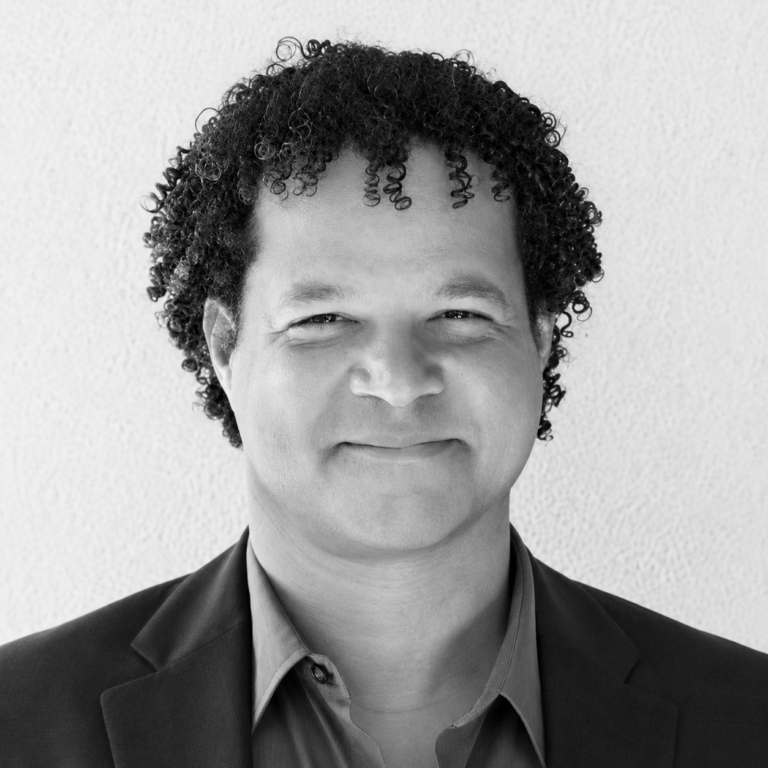
Film and media scholar who also lectures at the University of Hawaii at Manoa; author of Transnational Horror Cinema.

Cinematographer and NYU Tisch film graduate whose credits include Star Trek: First Contact.

Award-winning filmmaker and film teacher for more than 50 years; MFA in Film Producing from UCLA.

Award-winning director and producer with an MFA in Directing and Production from UCLA.

Award-winning writer and director (MFA, New York University) with grants from the Sloan Foundation and Showtime.

Award-winning Los Angeles director and producer of narrative films, music videos and commercials.
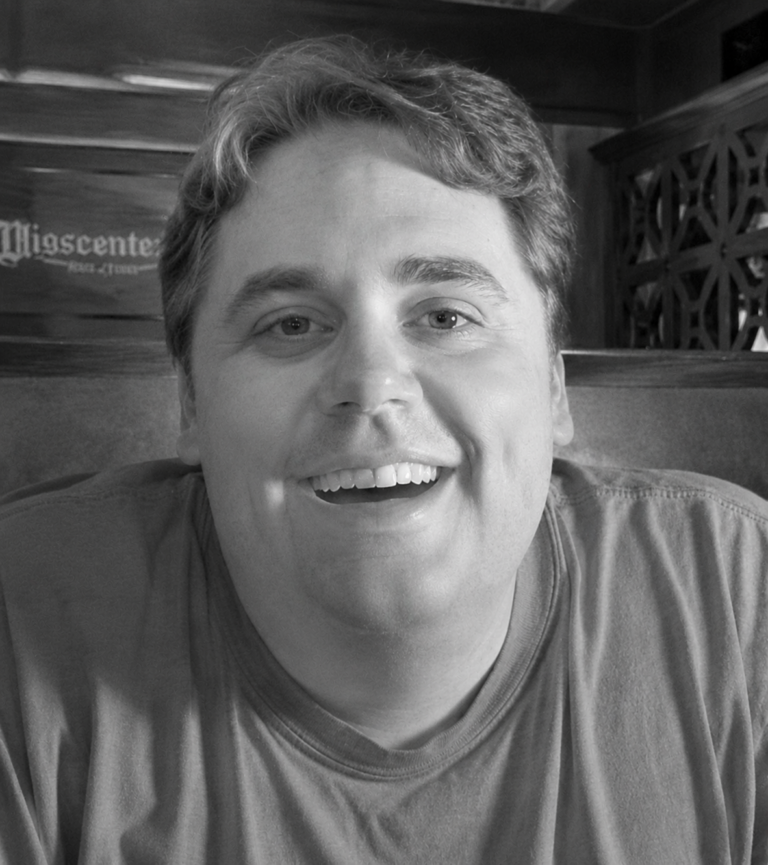
Film scholar with a Ph.D. from the University of Wisconsin-Madison, specializing in East-Central European cinema.
